
The U.S. Department of Justice in a federal court hearing Tuesday warned California election officials could be prosecuted if they count ballots cast by noncitizen voters, in a case brought by the Trump administration demanding that the state set aside the ballots of 20,000 suspected noncitizen voters. The remark by a DOJ lawyer about “criminal liability” for election officials who process ballots drew a sharp rebuke from the judge presiding over the hearing. “This court believes it would be wise — it would be wise that any threats to the state, county elected employees cease immediately,” Judge David Carter said from the bench. The extraordinary argument from DOJ came as President Donald Trump’s last-minute push to assert authority over voting encounters skepticism and resistance from federal judges less than a week before Election Day. Trump faces political defeat if Republicans lose one or both chambers of Congress in the midterm elections. Carter, an appointee of former President Bill Clinton in U.S. District Court for the Central District of California, held the hearing in the Justice Department’s lawsuit that seeks to force California election officials to segregate and not count ballots from the list of 20,000 unless they can prove their citizenship. Carter adjourned an hours-long hearing in Los Angeles by promising a decision Wednesday. Before adjourning, Carter urged the Justice Department to drop the menacing rhetoric. Possibly heading to Supreme Court Carter’s ruling — whatever he decides — will almost certainly be appealed to the U.S. 9th Circuit Court of Appeals and, possibly, the U.S. Supreme Court. A three-judge panel of the appeals court has already ruled against the Justice Department once in the case. During the hearing, Bill Essayli, the first assistant U.S. attorney for the Central District of California, raised the prospect that election officials could be criminally exposed if they move forward with counting the ballots. “What they cannot do is knowingly count ballots when they have specific information that these individuals are noncitizens. That they cannot do,” Essayli said, adding that “they would be criminally liable if they knowingly process a ballot of a noncitizen. They would have the same criminal liability of the person who voted.” Anne Bellows, a lawyer for California Secretary of State Shirley Weber, a Democrat, said that even though the Justice Department refers to the list as “likely” noncitizens, the court heard Essayli “threaten elections officials with criminal prosecution if they tabulate the ballots of those on this list.” Christopher Pelham, a lawyer for Los Angeles County Registrar-Recorder/County Clerk Dean Logan, said the prospect that state and local election officials could face federal “trouble” for processing ballots “is chilling for them.” List of suspected noncitizens Earlier this month, the Justice Department provided a list of 20,000 California voters it said were suspected noncitizens and gave state and local officials 48 hours to review. When state and local election officials refused to act immediately, the DOJ sued to force election officials to segregate ballots from those voters and not count them unless they could prove their citizenship. Voter Guide: 2026 general election Carter appeared to signal he is skeptical of the Justice Department’s emergency request. At one point, he suggested he was inclined to set a hearing within the next couple weeks — likely after the election — for a deeper exploration of how the list of 20,000 people was compiled and its reliability. He indicated that would give time for a fuller examination of the issues at play but wrap up before Dec. 3, when California officials must certify election results. Court documents filed by the Justice Department indicate the U.S. Department of Homeland Security developed the list based on a public California voter roll the agency obtained. In a court declaration filed Monday, Nicolas Bartelli, associate director of the Fraud Detection and National Security Directorate at U.S. Citizenship and Immigration Services, a sub-agency of DHS, wrote that the agency “enhanced” the voter data using the research service LexisNexis. ‘The stakes here are enormous’ Essayli told the court that the Justice Department’s case would rise and fall on the credibility of the evidence. He said that once California officials were informed about the likely noncitizen voters, they must act. “It means something to be a United States citizen. It means something to participate in an election,” Essayli said. “We want to make sure those interests are safeguarded.” Lawyers for Weber and Logan sharply criticized the Justice Department’s arguments during the hearing. They voiced deep reservations over how the list was compiled and cast the DOJ’s move as an encroachment on California’s authority to run its elections. The U.S. Constitution assigns states the responsibility of administering elections. Congress can override state rules and regulations, but the executive branch has no unilateral power to intervene absent authority from Congress. The DOJ has pointed to a federal misdemeanor crime against noncitizen voting as justification for segregating ballots. But attorneys for the election officials argued the prohibition doesn’t preempt California’s state election laws, which also include a ban on noncitizen voting. Voters in California must attest under penalty of perjury they are a citizen and qualified to vote. Bellows described the consequences in the case as sweeping. Los Angeles County election officials have written in court declarations that segregating ballots would lead to potentially “catastrophic” problems. “The stakes here are enormous,” Bellows said, arguing that the DOJ’s demand risks disenfranchising voters.
Trump’s DOJ threatens ‘criminal liability’ for California officials in vote counting suit
October 28, 2026
Jonathan Shorman
Comments
Similar Stories
National Politics
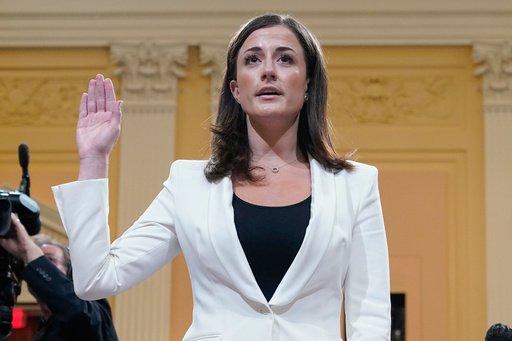
Grand jury refuses to indict former White House aide Cassidy Hutchinson, AP sources sayThe Justice Department has failed to secure a grand jury indictment against a former White House staffer who testified against President Donald Trump before a House committee investigating the Jan. 6, 2021, U.S. Capitol insurrection. Two people familiar with the matter said Tuesday the grand jury in Washington rejected prosecutors’ request to return an indictment charging Cassidy Hutchinson. It’s the latest setback in the Justice Department’s efforts to charge perceived adversaries of the Republican president. Hutchinson said Trump tried to let armed protesters avoid security screenings and grabbed at the steering wheel of the presidential SUV when the Secret Service refused to let him go to the Capitol. Trump calls Hutchinson a “total phony.”
October 27, 2026
Alanna Durkin Richer and Eric Tucker, Associated Press
National Politics
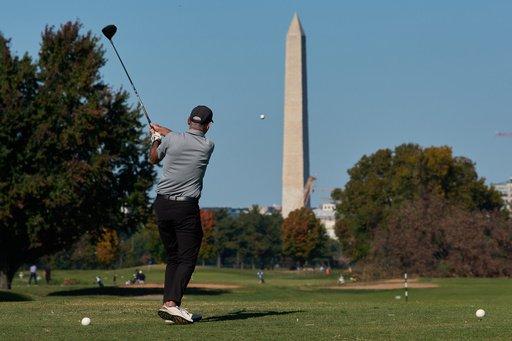
Who should be believed? Trump's social media post on golf course leads lawyers back to courtDonald Trump’s social media posts on the closure and renovation of a historic golf course in the nation’s capital are putting Justice Department lawyers in the uncomfortable position of explaining whether the president of the United States should be believed. U.S. Judge Ana Reyes says the department should clarify “whether any plan exists to close East Potomac Golf Course on or around November 15." She has ordered Associate Attorney General Stanley Woodward Jr. to appear in court Friday or Monday for a status hearing. Tuesday’s order is in response to Trump’s social media post late Monday criticizing Reyes' temporary injunction stopping work at the East Potomac Park.
October 27, 2026
Gary Fields, Associated Press
National Politics
Commentary: Water pipeline discussion is about choosing our future, or letting scarcity choose it for usImagine if Lake Oahe were filled with oil instead of water. We would treat it as one of the country’s greatest economic assets. Pipelines would be flowing. Industries would be built around it. The cost of moving oil west would be a budget line item. Water deserves the same kind of thinking. The difference is […]
October 27, 2026
Brad Johnson